In a world overflowing with high-tech hair serums and laboratory-engineered conditioners, it’s easy to overlook the quiet power of simple, whole-food ingredients. Yet long before commercial hair masks lined store shelves, women across the Mediterranean and beyond were blending egg yolks with olive oil to nourish dry, brittle hair back to life.
This classic combination isn’t just folklore. When you look closely at the nutritional composition of egg yolks and olive oil, you’ll find a compelling synergy of proteins, fatty acids, antioxidants, and vitamins that support scalp health and hair resilience. The egg yolk and olive oil hair mask is more than a nostalgic DIY remedy – it’s a nutrient-dense treatment grounded in biology.
Let’s explore why this blend works, how to prepare it safely and effectively, and who can benefit most from incorporating it into their routine.
Why Hair Becomes Dry, Weak, and Dull
To understand the value of this mask, we need to understand the structure of hair.
Each strand is made primarily of keratin, a structural protein arranged in overlapping scales called the cuticle. When the cuticle lies flat, hair appears smooth and shiny. But frequent heat styling, chemical treatments, harsh shampoos, UV exposure, and even environmental pollution can lift and damage the cuticle. The result? Moisture loss, breakage, and frizz.
The scalp also plays a critical role. Healthy hair growth depends on well-nourished follicles and a balanced scalp microbiome. When the scalp becomes excessively dry or inflamed, hair may appear thinner, weaker, or less vibrant.
This is where egg yolk and olive oil shine: one provides protein and micronutrients, the other delivers deeply penetrating lipids and antioxidants.
Egg Yolk: A Nutrient-Rich Hair Food
Egg yolk is often called “liquid nutrition,” and for good reason. It contains:
- High-quality proteins (including keratin-building amino acids)
- Biotin (vitamin B7), essential for hair structure
- Vitamin A, which supports scalp sebum production
- Vitamin D, linked to hair follicle cycling
- Iron, which supports oxygen delivery to follicles
- Lecithin, a natural emulsifier and conditioner
1. Protein for Strength
Hair is made primarily of protein. While applying protein topically doesn’t “grow” hair directly, it can temporarily reinforce the hair shaft, reducing breakage and improving elasticity. Egg yolk contains amino acids that help smooth damaged cuticles and strengthen fragile strands.
2. Biotin and Follicle Support
Biotin deficiency is associated with hair thinning and brittle strands. While most people get enough biotin through diet, topical application may still support hair structure by conditioning and smoothing the shaft.
3. Lecithin for Softness
Lecithin in egg yolk acts as a natural conditioner. It helps bind water and lipids, improving hair’s softness and manageability – especially helpful for dry or coarse textures.
Olive Oil: The Mediterranean Moisture Seal
Extra virgin olive oil is rich in:
- Oleic acid (a monounsaturated fatty acid)
- Vitamin E
- Squalene
- Polyphenols (antioxidants)
1. Deep Moisture Penetration
Oleic acid is small enough to penetrate the hair shaft. Research suggests certain oils, particularly those high in monounsaturated fats, can reduce protein loss and help retain internal moisture. This makes olive oil particularly beneficial for hair that’s been chemically processed or heat-damaged.
2. Antioxidant Protection
Vitamin E and polyphenols help neutralize free radicals. While hair itself is not living tissue, the scalp is – and oxidative stress can impact follicle function. Olive oil’s antioxidant properties may support scalp health when used in moderation.
3. Scalp Barrier Support
Olive oil can help soften and loosen dry flakes while reinforcing the skin barrier. However, it should be used thoughtfully – especially for those prone to scalp buildup.
The Science Behind the Synergy
When combined, egg yolk and olive oil create a balanced treatment:
- Protein + lipids = structural support and flexibility
- Vitamins + antioxidants = scalp nourishment
- Emollients + lecithin = smoother cuticle and shine
The yolk provides structure-building nutrients, while the olive oil seals and protects. Think of it as repairing the internal “bricks” of the hair shaft, then sealing the outer layer with protective moisture.
Who Benefits Most from This Mask?
This DIY treatment is particularly helpful for:
- Dry or brittle hair
- Chemically treated or color-damaged hair
- Heat-styled hair
- Curly or coily textures prone to moisture loss
- Hair exposed to sun, wind, or saltwater
However, it may not be ideal for:
- Very fine or oily hair (can feel heavy)
- Those prone to scalp buildup
- Individuals sensitive to egg proteins
How to Make the Egg Yolk & Olive Oil Hair Mask
Ingredients:
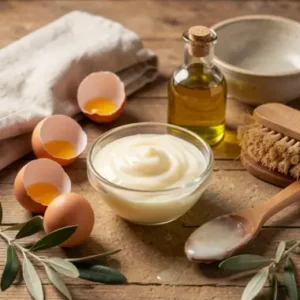
- 1–2 egg yolks (depending on hair length)
- 1–2 tablespoons extra virgin olive oil
- Optional: a few drops of lemon juice (to reduce odor and add shine)
Instructions:
- Separate the yolks from the whites carefully.
- Whisk the yolks until smooth.
- Slowly add olive oil while whisking to create a creamy emulsion.
- Apply to damp (not dripping wet) hair, focusing on mid-lengths and ends.
- Massage gently into the scalp if desired.
- Cover with a shower cap.
- Leave on for 20–30 minutes.
- Rinse thoroughly with cool or lukewarm water (hot water can cook the egg).
- Follow with a gentle shampoo to remove residue.
Use once every 1–2 weeks.
The Importance of Water Temperature
This detail is crucial: always rinse with cool or lukewarm water. Hot water will coagulate the egg proteins, making them difficult to remove and potentially leaving residue in your hair.
Safety & Hygiene Considerations
Because raw egg is used:
- Avoid if you have egg allergies.
- Do not leave the mask on longer than recommended.
- Use fresh eggs.
- Rinse thoroughly.
- Avoid using on broken scalp skin.
If you’re concerned about raw egg, you can use pasteurized egg yolks.
How It Compares to Commercial Hair Masks
Many store-bought masks contain:
- Hydrolyzed proteins
- Silicones
- Emollient oils
- Preservatives and fragrances
The egg yolk and olive oil mask provides similar structural and conditioning benefits without synthetic additives. However, commercial formulas may be more stable, longer-lasting, and lighter in texture.
This DIY mask is best seen as a periodic intensive treatment – not a daily conditioner replacement.
What Results Can You Expect?
After one treatment, many people notice:
- Softer texture
- Increased shine
- Reduced frizz
- Improved manageability
With consistent use (every 1–2 weeks), hair may feel stronger and less prone to breakage, especially if combined with gentle hair care practices.
Keep in mind: this mask does not “grow hair overnight.” Hair growth depends on internal health, hormones, genetics, and nutrition. However, reducing breakage can make hair appear fuller and longer over time.
Supporting Results from the Inside Out
For optimal hair health, topical treatments should be paired with:
- Adequate protein intake
- Iron-rich foods
- Omega-3 fatty acids
- Hydration
- Stress management
The egg yolk and olive oil mask works best as part of a holistic routine.
A Ritual of Care, Not Just a Recipe
There’s something grounding about whisking simple ingredients in your kitchen and applying them with intention. This mask invites you to slow down, massage your scalp, and reconnect with your body.
Hair care doesn’t have to be complicated to be effective. Sometimes, nourishment is as simple as combining two ingredients that have stood the test of time.
Final Thoughts: Is It Worth Trying?
If your hair feels dry, over-processed, or fragile, the egg yolk and olive oil hair mask is a science-backed, nutrient-rich option worth exploring. It leverages the structural proteins of egg and the protective lipids of olive oil to restore softness and resilience.
While it won’t replace professional treatments for severe damage, it offers an accessible, affordable, and biologically meaningful way to care for your hair at home.
In a beauty world obsessed with complexity, this mask reminds us that sometimes the most powerful solutions are the simplest.
And in this case, they’re likely already in your kitchen.